

This post was written by Rob Hall, Ed.D, President of Trauma Free World
Melissa is a regular every week. Sunday School every Sunday morning and, more often than not, Middle School youth group on Wednesday nights. Her Grandma Ruth, who Melissa lives with, is careful to drop her off at check-in and return promptly when things wrap up.
However, after hours and hours, weeks and weeks, months and months of sharing the love of Christ and the truth of the Gospel . . . nothing.
Something seems to be preventing Melissa from connecting to you and the ministry’s volunteers. She craves physical touch from adults to the point where it makes the team uncomfortable and leads her peers to teasing.
When left at check-in her behavior becomes impulsive and sometimes even destructive. While there are lots of theories amongst the team, there is one thing everyone agrees on – compared to the other 12- and 13-year-olds she seems much younger; more like an elementary schooler.
Despite all of the love, attention, and best-practice behavioral interventions, nothing seems to make a difference and Melissa appears no more likely to receive Jesus than when she showed up for the very first time a couple years ago. It’s like the logic of your teaching can’t get through because of Melissa’s inability to pay attention or recall details. And, it hurts to admit it, but the prayers and loving care of your team seem to have no effect on Melissa’s heart.
Melissa’s story above is indicative of so many that we hear about at Trauma Free World.
Trauma affects the bodies, brains, biology, behavior, and belief systems of the children and teens you’re serving.
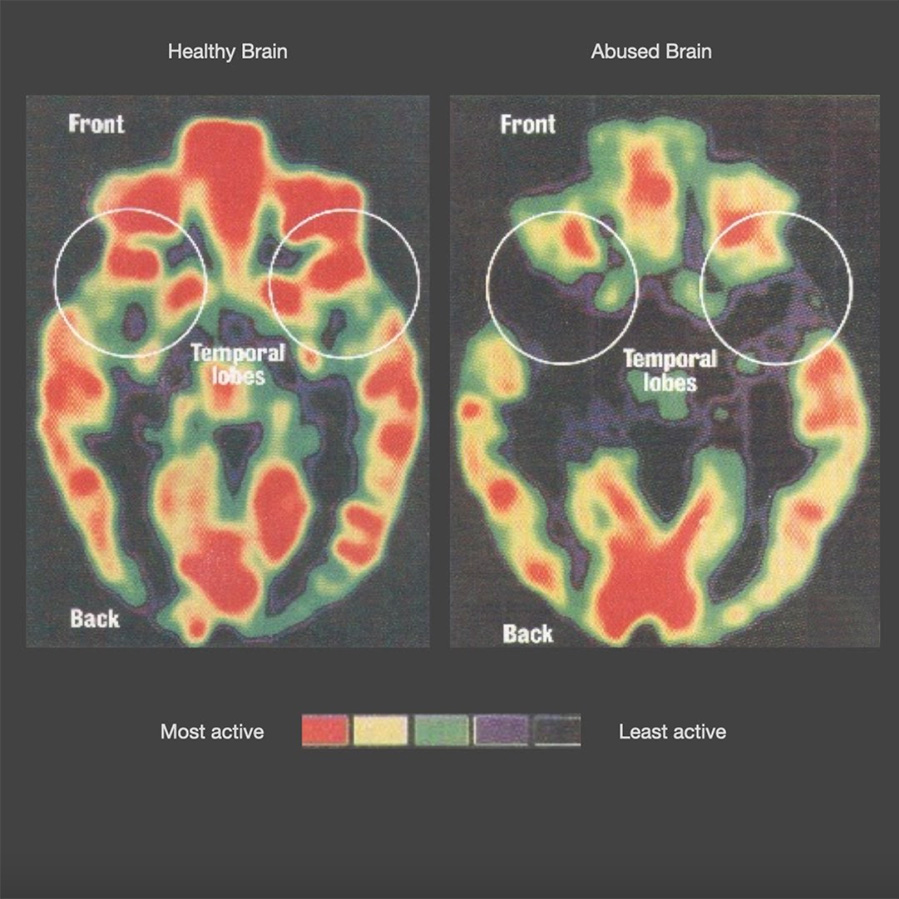
Complex Developmental Trauma is the result of abuse, neglect, or abandonment at a very young age from a caregiver who was supposed to keep the child safe.
Chronic trauma begins later in a child’s life and is the result of ongoing physical or sexual abuse, neglect, or can occur in difficult situations like living with an addicted family member, or, yes, even the high stress of a global pandemic.
Traditional interventions don’t work. Common practices that are meant to help children calm themselves, catch their breath, and return to the activities of the group work well with children who have not experienced trauma, but very often don’t work with children who’ve experienced trauma and, in some cases, can actually make things worse.
And, since you won’t likely know which of the children you serve has experienced trauma and which haven’t, what are you to do?
Well, the good news is that by learning and implementing principles of trauma-informed care, you’ll do right by every child and teen in your care.
Conversely, insisting on more “traditional” best practices or relying solely on the power of your love and care may show results for kids who haven’t experienced trauma but will most likely show marginal if any results from kids who’ve experienced complex or chronic trauma – perhaps even harming them.
We know practicing trauma-informed care is no longer an “extra” that could add to the effectiveness of ministry, it is absolutely essential for ministry to reach its full potential.
The team at Trauma Free World is thrilled to be the official trauma training partner of INCM. We know that kids ministry is hard work and we’re excited to help you and your teams be even better at the work you’re doing in the lives of kids.
If you want to learn more about trauma-care training for your kids ministry, don’t hesitate to reach out to Dr. Hall at [email protected] or connect with him via LinkedIn.
Rob Hall, Ed.D, is the President of Trauma Free World, the official trauma-training partner of INCM. Dr. Hall’s background in clinical counseling, as an administrator at Cincinnati Hills Christian Academy – a large pre-K-12 school in Cincinnati, Ohio USA, and leading advancement strategy at Back2Back Ministries has led to a well-grounded and diverse perspective on trauma and its effect on vulnerable children across the world.