This post was guest written by Jeff Smith.
As children’s ministry leaders, can you qualify what your children actually ‘do’ in worship?
Have you ever sought to bring intention to your teaching on the subject of worship in children’s church?
When someone says, “Come, let’s worship,” what do you think of doing?
What is Worship?
Merriam-Webster says worship is “reverence offered to a divine being or supernatural power.”
If worship is our reverence, praise is the visible expression of that reverence.
Praise is “our response to the character of God in terms of physical or verbal expression.”
We can introduce the idea of worship to our children by teaching them about praise.
We can point them towards the Holy of Holies while showing them life in the outer courts.
After all, the Psalmist writes, “Out of the mouth of children, I have ordained praise.”
God Is the Focus
We must keep God the focus of our praise. And to do that, we need to know the character of God.
As a writer, I can write authentically about what I know.
Solomon based his writings in Ecclesiastes on both the academic and the experiential.
“I thought to myself, ‘Look, I have grown and increased in wisdom more than anyone who has ruled over Jerusalem before me; I have experienced much of wisdom and knowledge.'” Ecclesiastes 1:16
Likewise, we learn about the character of God from reading and studying the stories of how He interacted with His people.
Learning God’s Names
Through biblical accounts, we find that God’s people gave Him names that revealed His character.
We can better understand this character by knowing what God’s names mean and how he has helped humankind for generations.
- EL: God (“mighty, strong, prominent”) used 250 times in the OT See Gen. 7:1, 28:3, 35:11; Nu. 23:22; Josh. 3:10; 2 Sam. 22:31, 32; Neh 1:5, 9:32; Isa. 9:6; Ezek. 10:5.
- EL SHADDAI: God Almighty or “God All Sufficient.” It appears 48 times in the OT, (Gen. 31:29, 49:24, 25; Prov. 3:27; Micah 2:1; Isa 60:15, 16, 66:10-13; Ruth 1:20, 21. (el shad-di’)
- ADONAI: “Master” or “Lord” 300 times in the OT always plural when referring to God, Ex. 4:10; Judges 6:15; 2 Sam. 7:18-20; Ps. 8, 114:7, 135:5, 141:8, 109:21-28). (ad-o-ni’)
- JEHOVAH: LORD. Yahweh is the covenant name of God. “The Self-Existent One,” “I AM WHO I AM” or ‘I WILL BE WHO I WILL BE” as revealed to Moses at the burning bush, Ex.3. (yeh-ho-vaw’)
- JEHOVAH-JIREH: “The Lord will Provide.” Gen. 22:14. From “jireh” (“to see” or “to provide,” or to “foresee” as a prophet.) God always provides for our needs but not our wants. He is not the bellboy. (yeh-ho-vaw’ yir-eh’)
- JEHOVAH-ROPHE: “The Lord Who Heals.” Ex. 15:22-26. God’s healing is for our spiritual, emotional as well as physical healing. (Jer. 30:17, 3:22; Isa. 61:1) (yeh-ho-vaw’ raw-faw’)
- JEHOVAH-NISSI: “The Lord Our Banner.” Ex. 17:15. God is on the battlefield and his banner flies over his people. Nissi is from word which means “to glisten,” “to lift up.” (yeh-ho-vaw’ nis-see’)
- JEHOVAH-M’KADDESH: “The Lord Who Sanctifies” Lev. 20:8. “To make whole, set apart for holiness.” (yeh-ho-vaw’ M-qadash)
- JEHOVAH-SHALOM: “The Lord Our Peace” Judges 6:24. “Shalom” translated “peace” (yeh-ho-vaw’ shaw-lome’)
- ELOHIM: “LORD God” Gen. 2:4; Judges 5:3; Isa. 17:6; Zeph. 2:9; Psa. 59:5. “The Lord Who Creates and Sustains Life” (el-o-heem’)
- JEHOVAH-TSIDKENU “The Lord Our Righteousness” Jer. 23:5, 6, 33:16. From “tsidek” (balanced – as on scales – full weight, justice, right, righteous.) (yeh-ho-vaw’ tsid-kay’-noo)
- JEHOVAH-ROHI: “The Lord Our Shepherd” Psa. 23, from “ro’eh” (to pasture). (yeh-ho-vaw’ ro’-ee)
- JEHOVAH-SHAMMAH: “The Lord is Present” (Ezek. 48:35). (yeh-ho-vaw’ shawm’-maw)
- JEHOVAH-SABAOTH: “The Lord of Hosts.” The commander of the angelic host and the armies of God. (Isa 1:24; Ps. 46:7, 11; 2 Kings 3:9-12; Jer 11:20) (yeh-ho-vaw’ se ba’ôt)
A critical connection to teaching your children praise must include teaching them the names of God and the character traits these names reveal.
Ways to Teach Kids God’s Names
Here’s a way you could use God’s different names to teach kids about God’s character:
- Highlight a name of God each month in your programming.
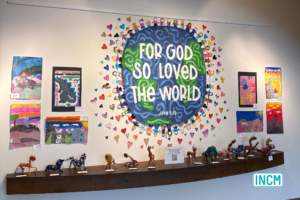
- Make a sign that includes the pronunciation, the original Hebrew spelling, meaning ,and story behind the name. Put in a prominent location that can be seen, especially during the worship time. Reference it often throughout the service time.
- Pick music that accentuates this attribute of God and sing about his power (Jehovah Sabaoth) or his faithfulness (Jehovah Jireh).
- Find ways to connect these character traits into the Bible teaching. For example, the story of Adam and Eve reflects the nature of God as Jehovah Elohim.
By teaching your children the names of God, you are putting them on the path to praise and a life of worship.
Jeff Smith is the Director of Salt & Light Ministries based near Richmond, VA. He resides in Richmond, VA, with his wife Debbie and their two sons, Benjamin and Samuel.