This post was guest-written by Kayla Smith from Reach Hurting Kids Institute.
“Big feelings don’t last forever!” My nephew, Noah, spoke these words over and over again, holding my son’s hand as he cried about his scraped knee. We had been hiking for all of five minutes when Owen fell, and naturally, it resulted in some really, REALLY big feelings. He was angry that he fell. He was embarrassed to have tripped in front of everyone. He was scared and surprised and sad at the pain he felt. These huge feelings swirled around in his body, causing a disproportionate reaction to a small scrape. But, as his cousin so sweetly reminded, “big feelings don’t last forever,” and soon, Owen was able to stand back up, dust himself off, and keep going on our adventure. Because of his cousin’s empathy, my son found the courage to ride the wave of emotions he felt and find his footing again on the other side.
In a world in which kindness and understanding can often seem in short supply, teaching our children about empathy is crucial. This is, after all, who Jesus calls us to be! In Colossians 3:12, we are reminded that, as God’s chosen people, we should be “clothed in compassion, kindness, humility, gentleness, and patience.” Because God has so deeply loved us, we can extend that same love to those around us! Sometimes, this call to compassion feels easy to pursue: there’s an obvious hurt in front of us, and we respond in empathy, offering the tools our neighbor needs in order to heal. We can teach our children to offer a hug or a bandage, a hand up or someone to run for help.
But sometimes, empathy isn’t so straightforward. Sometimes, the hurts around us aren’t so easy to see. For children who have experienced trauma, their hurt is often communicated in behaviors that are off-putting, obnoxious, or even dangerous. How do we teach our kids to be “clothed in compassion” for their peers who are clearly hurting, but their hurts aren’t clear?
Understanding Trauma
While all children benefit from both extending and receiving empathy, this is especially important for children who have experienced trauma. Trauma affects every part of a child – their heart, soul, mind, body, and relationships. Kids affected by trauma often feel afraid because they’ve learned that the world is a dangerous place. They feel out of control of their mind, body, and emotions. They behave in ways that get them in trouble and push people away. This leaves them feeling rejected and worthless.
When these kids express their feelings of fear, dysregulation, rejection, and worthlessness, this communication is often mistaken for misbehavior. As the grown-ups in the room, we can learn to respond to the deeper need rather than react to the overt behavior, but what about the rest of the children in the room? How can they respond in a way that helps their friend heal and grow in Christ?
Teaching Empathy
We can teach children to respond to their peers with Christ-like empathy! Empathy is all about putting on that “garment of compassion” that Colossians talks about: offering kindness, humility, gentleness, and patience in the name of Jesus. It’s the ability to understand and share the feelings of another, bridging the gap so that we can love in Jesus’ name.
Our first step, though, is to teach our kids how to recognize that their friend needs them to empathize. Recently, Reach Hurting Kids Institute partnered with Maegan Hall to create a fun, friendly video for kids that explores the topic of empathy. In this resource, Maegan’s friend, Zadie, wonders how she can help her friend who is upset. She learns that sometimes, hurts aren’t something you can see – sometimes, it’s more like a hurt heart. Maegan encourages Zadie to offer empathy to her friends, and in doing so, she shares the love of God with them. Take a look here!

We’ve also written a simple curriculum you can download to go along with this video resource! Find it here.
Building Empathy Skills
As you incorporate empathy into your church’s curriculum, here are a few strategies to keep in mind:
- Encourage active listening. Sometimes, a non-judgmental listener is exactly what a friend needs. This can help the listener better understand their peer’s experiences and emotions.
- Promote kindness. Offering a kind word or a hug can have a powerful impact on a child’s sense of worth and belonging. Remind kids that, even if their friend doesn’t respond, their kind words are like a healing balm.
- Practice forgiveness. It does, indeed, take a lot of practice to extend forgiveness. Remind your children often that everyone makes mistakes, and by showing forgiveness, we can show the same grace God has shown toward us.
- Lead by example. All children learn best by observing the behavior of adults around them. Model empathetic behavior in your interactions with others (and yourself!), and children will learn to do the same.
Final Thought
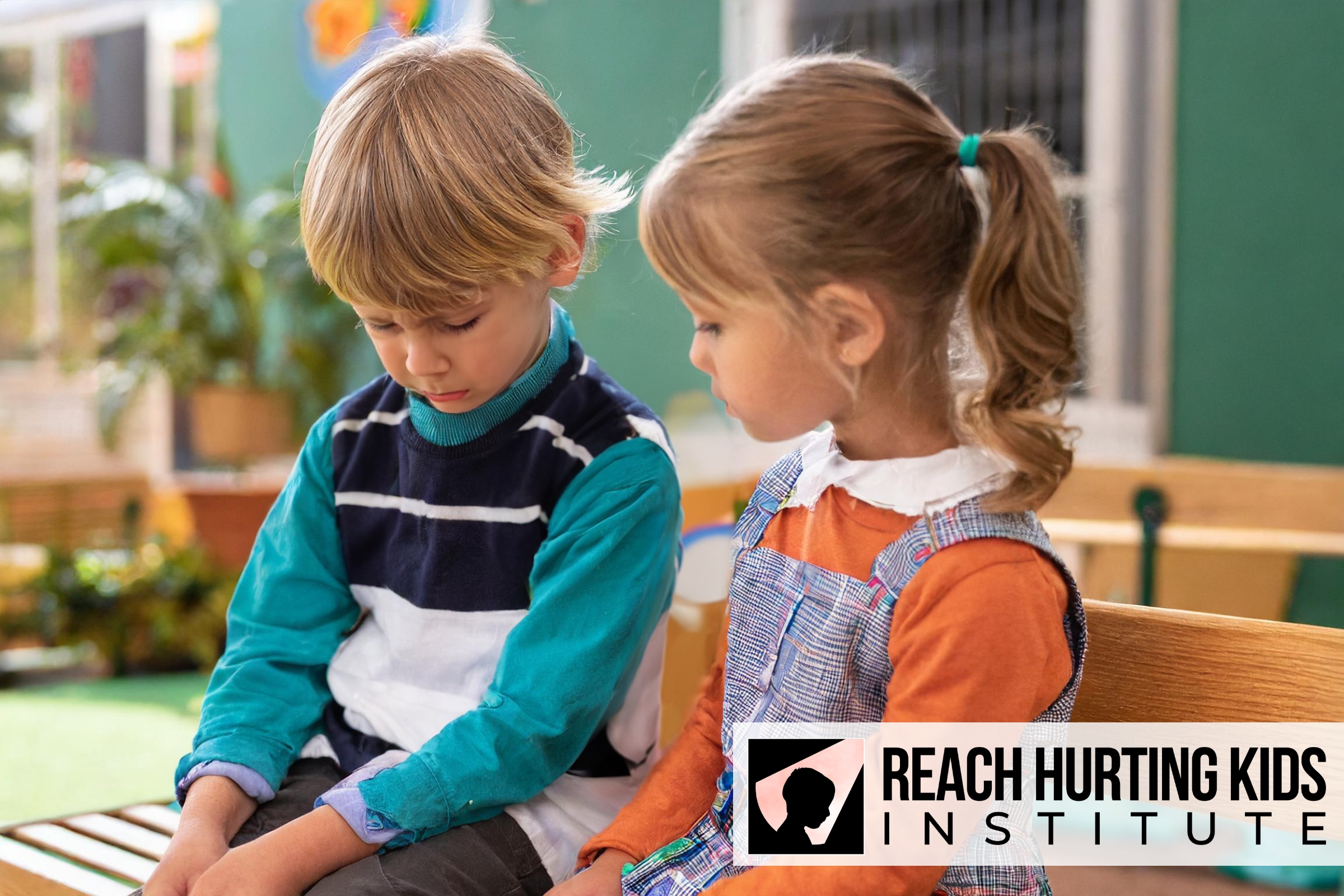
Teaching children about empathy is a powerful way to foster an environment of healing, understanding, and connection at your church. By instilling these values from their earliest days, we are equipping children with the skills they need to navigate the complexities of human relationships, wearing the compassion, kindness, humility, gentleness, and patience of Christ. We can teach them to sit by one another when hurts are obvious and less-than-obvious, holding their friend’s hand and encouraging them that their big, painful feelings don’t have to last forever. May this be a generation of kids who mirror the kindness of Jesus in all of their interactions!
To learn more about Reach Hurting Kids Institute and our trauma-informed training materials, go to reachhurtingkids.com/workshop!

About Kayla
Rev. Kayla Smith is the Associate Director of Reach Hurting Kids Institute and serves at Trevecca Community Church of the Nazarene as Pastor of Intergenerational Discipleship. She spends most of her time tagging along on her five-year-old’s adventures. Kayla draws from her background in leadership and special education to empower churches to embody Christ’s love for every child. She leads workshops, trains children’s and youth teams, and consults with leaders about trauma-informed practices in the Church.